
How I Got Replaced in Europe
Starting work on chapter 2 of Slack EMEA. Prospecting candidates from rooftops. Moving upscale in Dublin.

Among the many jobs I needed to do to open Slack’s EMEA offices in Dublin and London, one that I only rarely considered was the job to replace myself. I’d be leaving at some point. Who would take over?
In the rare occasions when the day-to-day work of just getting up and running gave me a chance to zoom out and reflect on the bigger picture, that question nagged at my brain. Hiring the team and training the team and actually building the business occupied at least a full-time spot in my brain. Years away when we were set to wind up our mission in Dublin seemed years away. But soon enough it wasn’t.
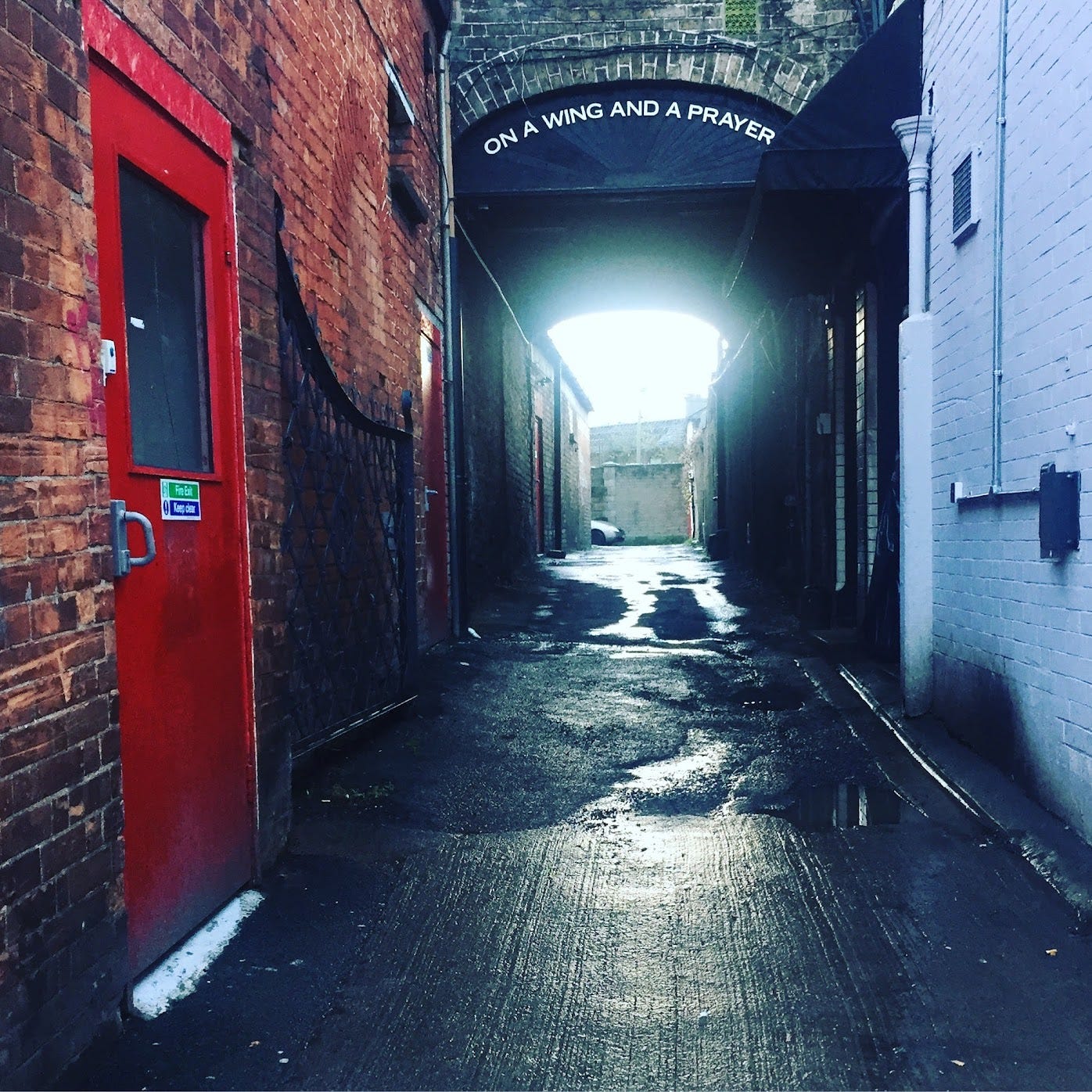
And about a year into our European adventure, I started to get inbound messages from folks. They never said, ‘Hey, are you hiring a new leader and could I be considered?’ They just wanted to meet up, see how our journey was going, share insights on opening up offices in Dublin, learn about Slack. The tone was collegial and friendly, not fishing or transactional.
So I started to meet with some of those folks. Why not? I recognized in them and in our conversations a range of future benefits for Slack. Perhaps we could hire them. Perhaps we could sell Slack to them. More importantly, I hoped we could learn from them and their experience.
These meetings seemed to always take place in rooftop restaurants with large windows, natural light and vistas across the low hiccuping Dublin skyline. These restaurants crowned a selection of fashionable business hotels. In the city centre that meant the bricked charm of Sophie’s at The Dean Hotel. At the Docks, around the corner from Facebook and Google, that meant the sleek minimalism of The Marker. Just off the Grand Canal, a block from LinkedIn and Amazon, that meant The Mespil Hotel.
Starting Work on Chapter 2
The folks I met with approached our conversations with a high degree of transparency and trust, and I appreciated that. So I did too. They seemed genuinely interested in our experience and ready and available to share their own lessons.
They talked about their teams’ composition and go-to-market strategies. I gained perspective on how they hired and grew to their current size. How they targeted specific markets. How they decided to stop working with German customers or French customers or Swedish customers from Dublin and instead open an office in Frankfurt or Paris or Stockholm.
In their stories the second chapter of what we could achieve with Slack in Europe opened up and started to become clearer. Chapter 1 had been landing, finding our feet, getting our first few hires in place and an office up and running, then creating some faith at Global HQ in SF that EMEA was going to go.
Chapter 2 turned out to be building the team from about 30 people to about 120. Getting a newer, larger office to reflect newer, larger ambitions and confidence. Starting to hire beyond Customer Service and Sales to bring on representative business services — Recruiting, HR, IT, Finance, Legal, Facilities Management.
At the same time, it also meant continuing to scale up Customer Service and Sales. Creating a new layer of management in those teams, either by bringing in new hires or promoting from within. It meant creating some segmentation, most likely by market, to reach deeper, develop expertise and serve more customers. French companies liked to work in French with folks in France. German companies in German. UK companies wanted to pay in pounds sterling.
In our journey to decide on opening in Dublin, we’d heard many times the standard stories of US tech companies’ expansion, both from the companies as well as from the team at IDA Ireland. Now we were travelling that path. Some of our journey lined up with those standard stories — our office needs, our hiring progression — and some of our journey diverged — our growth timing proved very fast, we had already opened and hired people in London.
All of this to say: I still had lots to learn from my conversations at those rooftop hotel restaurants.
Prospecting Candidates
The most credible leader I met with was Johann Butting, a German by birth who had lived in Dublin for over a decade. He had deep roots in the web and innovation efforts with Bertelsmann. He had led Sales teams for Google in Dublin. When I first met Johann he was leading Sales teams for Dropbox.
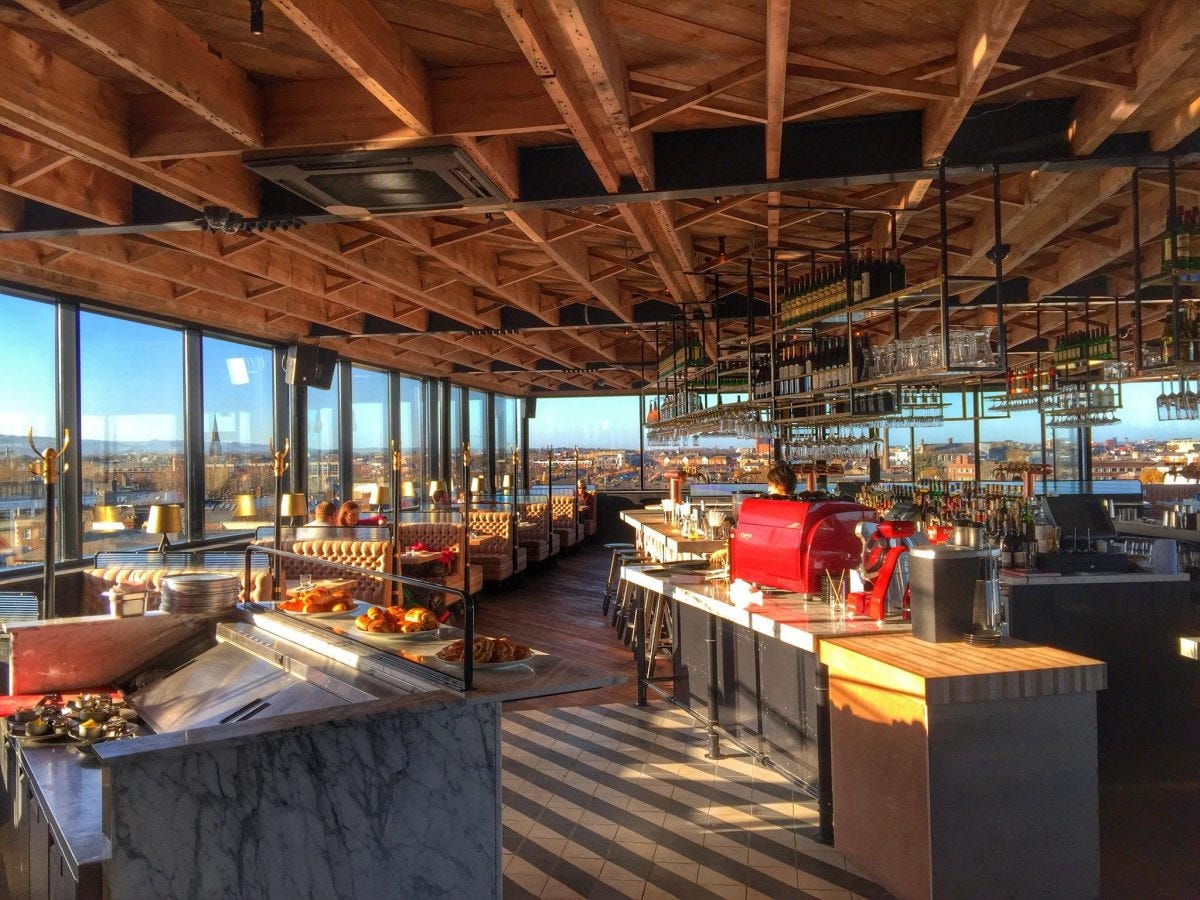
Our meetings always happened at Sophie’s, a vibrant restaurant at the top of the Dean Hotel. We always met at 11am, just as they started service. We both had coffee and maybe sparkling water. The place was empty except for the staff readying for the coming lunch rush, and us. That atmosphere gave us the chance to really connect, without anyone interrupting.
At Dropbox, Johann led a team of close to 200. In our conversations, he had a very strong perspective on how to manage teams and build a business in EMEA. Johann always made it clear he was happy at Dropbox, building the business. But my sense was he also saw how that business was boxed in to further growth. Their core product — synchronized file sharing in the cloud — had been a great innovation that now many competitors with deeper pockets and fuller product lines (Box, Microsoft, Google) offered as well. He could see how Slack’s market position meant we’d be able to continue to grow and really only faced potential significant threats from Microsoft and Google.
In our conversations I should also say that the selling was bi-directional. Dropbox were Slack customers and I wanted to ensure their EMEA leader was an advocate. He was probing on whether our growth and product success was real. I was focused on making it real for him and helping him use Slack more effectively.
We developed a sort of mutual respect for the different parts of the conversation we could have. He could see the trajectory Slack appeared on. I could see his depth of experience and expertise. He could see I needed to speak with lots of people, and our relationship had multiple facets. I could see he respected his role at Dropbox and his team and wanted to honour his current commitments.
Meeting up with Johann felt mildly clandestine, but really out of respect and not out of shame. We weren’t hiding but we weren’t flaunting our conversations. I had visited the Dropbox offices a few months earlier to meet with another person who’d reached out to me and and who we had hired at Slack, so perhaps I already felt like I’d crossed any imaginary boundaries and invaded their space?
In any case, we always arrived and left separately, one before the other, though it was only a 5-minute walk back to the shared office building. I remember standing in the foyer of Sophie’s waiting for him. They had a swing on a rope and the smell reminded me of old ships. I must have been early for our meeting as I daydreamed about the Nonesuch, a ship in a museum I had visited as a boy in Winnipeg. He arrived on time and we both silently recognized we could meet but should keep those meetings discreet.
Oh, and that shared office building I mentioned? Right. That’s because Slack had moved up in the world of Dublin office addresses.
Slack Dublin Grows Up
A key part of starting Chapter 2 of Slack Dublin proved to be finding new offices. We’d outgrown the Guinness Storehouse in more than just floor space. Like with our posh Slack London offices, we knew where we worked could signal our ambitions, and our ambitions had grown with our business.
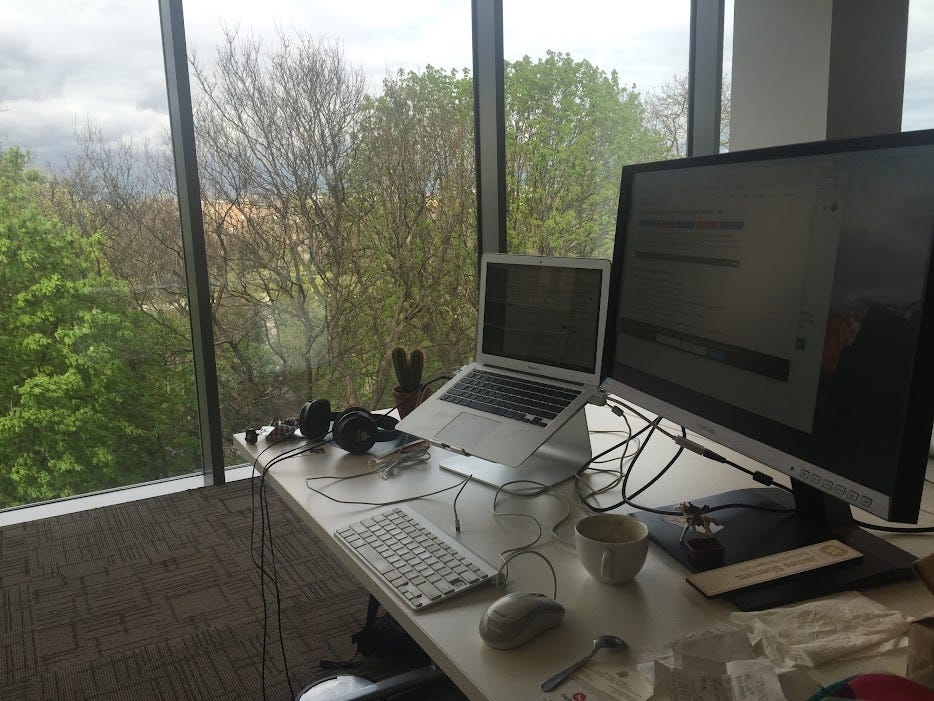
Our move to One Park Place in Dublin felt simple and easy and obvious. We toured a few other options but leasing a whole floor in the building, overlooking the Iveagh Gardens, beside Twitter and Dropbox who also had whole floors, felt like it matched our trajectory best.
What felt awkward was actually working in the space, at the beginning. Suddenly we found ourselves with room to accommodate around 160 people, though we only numbered 30. Islands of employees gathered in clusters of desks near the windows, surrounded by vast tracts of low pile carpet and empty workstations. It took some effort and time to start to feel comfortable and create a new sense of connection, like stepping into a new pair of shoes. These were still our teenage years so we bought for a proper future fit.
The kitchen, now that we had one, acted as the key focal point. We had meals together. We had coffees together. We started a new tradition called the Small Hands, a meeting for everyone in the office that echoed the All Hands, but just for those of us in Dublin and London. Free massages once a week to go with the free food might have contributed to improving morale and dedicated office attendance. People wanted to be there. We settled in, got to work, and gradually filled the space as Slack kept growing and hiring.
Julian Brophy joined the team from Twitter as a new convert to Sales and took to it like a duck to water. Sarah Hamid made a lateral move from Slack Customer Service to Slack Sales and learned the new job like a star in training. We needed them both up to full speed quickly because our growth continued to make every day feel like a treadmilled race to keep up.
Starting the Search
When we finally formally started a search for a new EMEA Sales leader, I had 4 referrals to offer into the process. Bob Frati, our VP of Sales, was leading the search.
My role in the process? Turned out it was pretty much done. Bob wanted to be hands-on and, though I had strong opinions, I wanted to trust him to run his process and decide on his best candidate. I helped out with those 4 candidate referrals and then went hands free.
It felt a bit strange, but I let go of any notion I had I needed to be key in the process. I had already learned that what we were seeking in candidates had changed. I trusted that we had good people who knew more than me and knew what they wanted.
Mainly, that meant Bob. I joined some of the later interview calls but felt it best to have him come to his own conclusions from the candidates, both that I had met with, as well as the candidates our recruiters had sourced. The successful candidate would be on Bob’s team after all. As my friend Darren used to say, “Hold on tightly, let go lightly.”
For the final interviews Bob flew to Dublin. A packed agenda awaited him. It was his second or third trip to EMEA as Slack’s Sales leader. He landed from the red eye and said he was game to head out for an afternoon Guinness. I can’t remember if we went to Madigan’s Pub on Lesson Street or Hartigan’s Pub on Leeson Lane, but I do remember we each held the line at one. There was still work that needed doing that day. Having the Guinness felt a bit like the warm up, the soft landing, the unofficial welcome to Dublin after getting your passport stamped.
Bob spent the next few days interviewing candidates and getting to know our new office, our new team members. I watched the candidates come and go, including Johann and a few others I had referred to the process and met with. Then things happened outside my view. The process worked its away along. I worked on our daily business with our team. Then Bob spoke with me about Johann. Then Bob spoke with some other folks about Johann. Then we hired Johann.
Johann started at Slack in January of 2017 and that marked for me the beginning of the end of my time in Dublin. Now he was in place. I still had time to help him get up to speed and settled. Then I had to find what I was going to do next.

Up next — Irish Irish Coffee (with recipe): Visiting the neighbours one Christmas afternoon. Including a recipe. Making it to taste.
I like your line about “surroundings signalling ambitions.” You grow into them. I also like that you didn’t appear to know where those convos with Johann would go but intuitively knew they were important and just trusted whatever process seemed to be underway.